


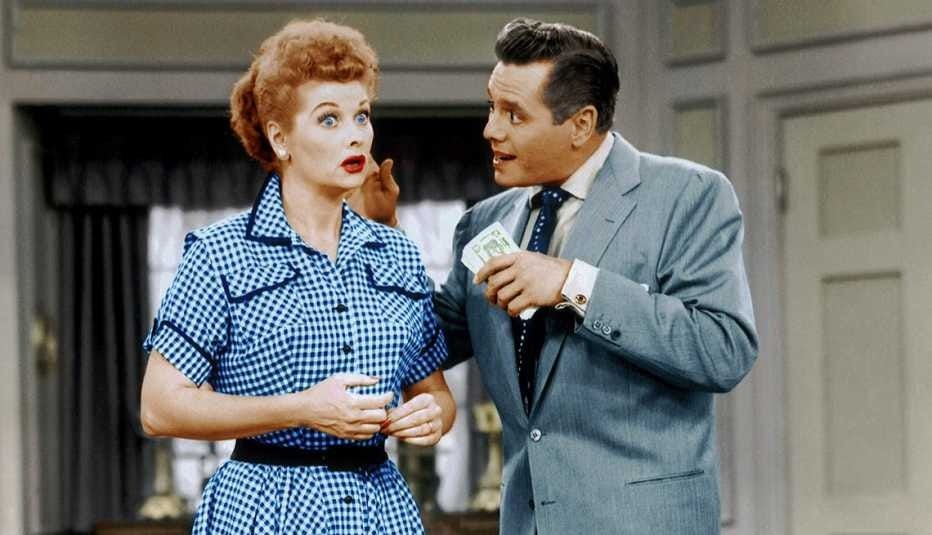
It’s been two months since my husband and I got rid of television. We took the TV off the wall, tossed out the Roku, and deleted every streaming service off of our phones. I have not seen the second season of “Severance,” nor the second season of “Silo,” nor the third season of “White Lotus,” shows I once enjoyed, and now can hardly remember. We didn’t watch the Super Bowl. We don’t watch the news. I couldn’t tell you the latest pop culture headlines if I wanted to. (I don’t.)
The average American watches 19 hours of television per week, which means in two months I’ve regained 152 hours: a vast, overwhelming sea of time.
It was uncomfortable, at first, living without the TV. For us, television offered background noise: “The Office,” “The Barefoot Contessa,” or “Seinfeld,” kept us company while cooking dinner, folding the laundry, or emptying the dishwasher. We’d already seen the episodes, of course, the point was ambience. The distraction helped pass the hours between dinner and bedtime, hours every parent knows are the hardest of the day. It also, inevitably, lured the entire family onto the couch and drove the baby insane. She would cry and stomp her feet and wail for attention as mom and dad flopped like dead fish, everyone praying for the clock to tick faster. When bedtime finally arrived, my husband and I would return to the couch, childless, to “relax” with a plot-driven show, something about crime, psychopathy, or dystopia. Then, both amped up and worn out, we’d climb into bed and try to sleep.
Now, there is no background noise. I play music while cooking dinner, but otherwise, we fill the silence or live with it. After dinner, we clean up the kitchen. We feel the tug of boredom. We look at the clock. We have to do something, we say, should we go to the park? Then we go to the park. The baby is thrilled with this adventure, thrilled with the sunset, thrilled with our undivided attention. Once we’re home, and the baby is bathed, pajamaed, and put to sleep, my husband and I read. He sits at the kitchen table, a candle burning, a notebook and pen at his hand. I read in my office. Folks, he has read twenty books in two months. I’ve read a dozen. (He reads to learn; I read to savor.)
It took removing television from our lives to see exactly how oppressive it was; how it shackled us to convenience. Americans have a pretty good idea about the psychological cost of social media, and because of that research, I don’t use Instagram, TikTok, or Facebook. (When I open Twitter I feel nauseated and close the browser quickly.) But what about television? Television has always seemed relatively harmless, and also, more importantly, I loved it.
But it turns out, long before social media tore America’s social fabric apart, television had been unraveling its threads. The Atlantic’s Derek Thompson reports that by the 1990s, people who watched TV as their “primary form of entertainment” were less likely to do anything else: “volunteering, churchgoing, attending dinner parties, picnicking, giving blood, even sending greeting cards.” Another factoid: “Men who watch television now spend seven hours in front of the TV for every hour they spend hanging out with somebody outside their home.”
The more I thought about it, the more I realized how the promises of television went unfulfilled, and the unintended consequences were more powerful than I knew.
Take, for instance, the promise of relaxation: Watching TV is supposed to be leisurely, but I find good television—fresh, compelling—to be very stimulating. I find bad television—cliched, overwrought—to be very annoying. Rewatching classic television (“Seinfeld,” “Gilmore Girls” et al.) can be good, but it’s frustrating, too, since each character’s flaws are so obvious: Can Jerry never find someone nice to date? Can Lorelai never bury the hatchet with Richard and Emily? I enjoy laying on the couch, putting my brain on “idle,” holding a mug of tea, listening to familiar voices and familiar dialogue, until I realize it’s a poor substitute for the experience I’d really like to be having—laying on the couch, holding a mug of tea, listening to a friend—and then I just feel lonely. Is any of it relaxing? To pose a deeper question: Do we want to be relaxed? Relaxation exists in opposition to stress, like sleeping pills exist in opposition to coffee. We might not need so much of one if we ditched the other. With less stress, and less leisure, we might nurture something more perennial, like peace.
For a second example, consider the promise of information. Live TV—news and sports—is still the bread and butter of cable television, and the loftiest ambition of streaming. Wall-to-wall live television promises consumers their choice of diverse current events to engage with, but feeding such a beast somehow results in monotony: National news coalesces around the same stories, the same celebrities, the same politicians, with every channel reproducing the American monoculture in some mix of Taylor Swift, the NFL, and Donald Trump. The content makes sense only when you see it as a delivery mechanism for the real product: ads.
There was a stretch of the baby’s life when we watched the “Today Show” every morning. (She’d wake up at 4:00 a.m. and only doze off again on the couch, in my arms, with the murmur of morning news.) It felt cozy and suburban to watch Hoda and Jenna test mascara and cook veggie burgers, until I noticed every commercial was for Ozempic, Nurtec, Skyrizi, Cymbalta, and whatever else. I could lose twenty pounds in a month, the ads told me, I could get rid of migraines, get clearer skin, and manage clinical depression. Ask your doctor today! By the time I felt fat, patchy, and convinced of a migraine, the show would come back on, with various NBC anchors breaking in to report updates about the war in Ukraine, the war in Gaza, and the 2024 election. Then we’d go back to mascara, overnight-oats recipes, and another ad for Ozempic. Good and anxious, experts recommended me a massage tool, an eye mask, and a pineapple smoothie to help relax, and also a prescription for Zoloft. Shop now!
Last, and perhaps most dangerous, is the promise of entertainment. Here, television actually delivers: Twenty first century TV has become incredibly, historically, even artistically, good. “TV [became] the new literature, or cinema, or maybe even religion,” wrote The New York Times’s chief TV critic. “Critic[s] heralded ‘The Sopranos’ as possibly the greatest work of pop culture in a quarter century. ‘Deadwood’ was likened to Shakespeare, ‘The Wire’ to Dickens, ‘Mad Men’ to Cheever. People deconstructed ‘Lost’ and argued over ‘Girls.’”
TV at its best is art; it sweeps us away, it challenges our preconceptions, it tells us stories we’ve never heard. But TV at its worst does this too; it’s still art, albeit tasteless and haphazard. Art takes an opinion—that is its nature—and by interacting with it, we give possibility to that opinion. We hold it in our minds. This psychological bridge, the tether between author and reader, painter and collector, director and movie-goer, is what makes art so powerful, and it shouldn’t be taken lightly. Every movie, television show, podcast, or TikTok opens up that psychological bridge. Powerful ideas might waltz across without your noticing.
So much TV is centered on the worst of human behavior: lying, cheating, stealing, abusing, over-sexualizing, murdering. Ancient Romans cheered death at the Colosseum, entertained by someone eaten alive by lions, and I look at my Netflix history and wonder, Are we so different? Violence aside, any ordinary episode of TV is rife with dubious ideas about money, power, sex, and beauty. Ina Garten’s life on “The Barefoot Contessa,” makes me want to be wealthy, live in the Hamptons, and only eat artisanal, home cooked meals. The impossibly thin cast of “Selling Sunset” makes me never want to eat again. My mind is swayed by the beauty and verve of whatever’s on screen, which may seem innocent, until you remember this quote by Carl Jung: “People don't have ideas, ideas have people.”
For our family, it was easier to cut TV out all together than negotiate boundaries and limits. This may sound like escapism, or separatism, and I do sympathize with the desire to flee culture run amuck—like the ancient Jewish Essenes shunning Hellenism to pray alone in the desert, or the nineteenth century Luddites smashing weaving machines in English factories. But I’m not recommending intellectual purity—a refusal to interact with uncomfortable ideas—but rather the development of a certain unused muscle: discretion.
Picture a horse under an apple tree. He noses around to choose a piece of fruit. He doesn’t have to eat an apple, but he can if he wants to. Now picture a horse with a feedbag strapped to its face. Is that horse capable of choice?
By breaking our habitual requirement for television, ripping off the algorithmic feedbag so to speak, my husband and I have been able to thoughtfully re-introduce media, in very small doses, one apple at a time. Last week, we watched this version of Thornton Wilder’s play “Our Town.” It was excellent! We watched this version of Robert Bolt’s “A Man for All Seasons.” It was incredible! Let me stress this point: These were one-time purchases and didn’t require a subscription. They weren’t suggested by a platform, but recommended by someone in my husband’s coffee group. We chose to watch these movies precisely in order to challenge ourselves, to think. I felt a thrilling, tingling sensation, like the chill of an air-conditioned movie theater from childhood.
There was so much to taste, here among the orchards.
Couldn’t agree more on ditching TV. I grew up without TV because we were too poor to afford cable and the bunny ears on our TV from the dump only pulled in the weather channel, patchy at best. I lamented my whole childhood to my parents about this. They were undeterred. Both due to their lack of money but also conviction it was a waste of money.
Now as a 40 something, I am eternally grateful. I’ve never owned a TV or online streaming subscription. I don’t own an iPad. We go outside every evening no matter the season. I watch my kids have incredible attention spans compared to peers with TV
And screens, and incredible creative play.
It is nothing short of liberation from cultural BS that does not help us live fulfilling authentic lives.
When my kids were growing up, we had limits on TV and Internet usage. We had a hard cutoff at 6 PM. Therefore, they had to entertain themselves for the rest of the evening. When I was growing up, as an only child, I always had to entertain myself, so our media cutoff was a throwback to that era, which led to creativity and imagination.